
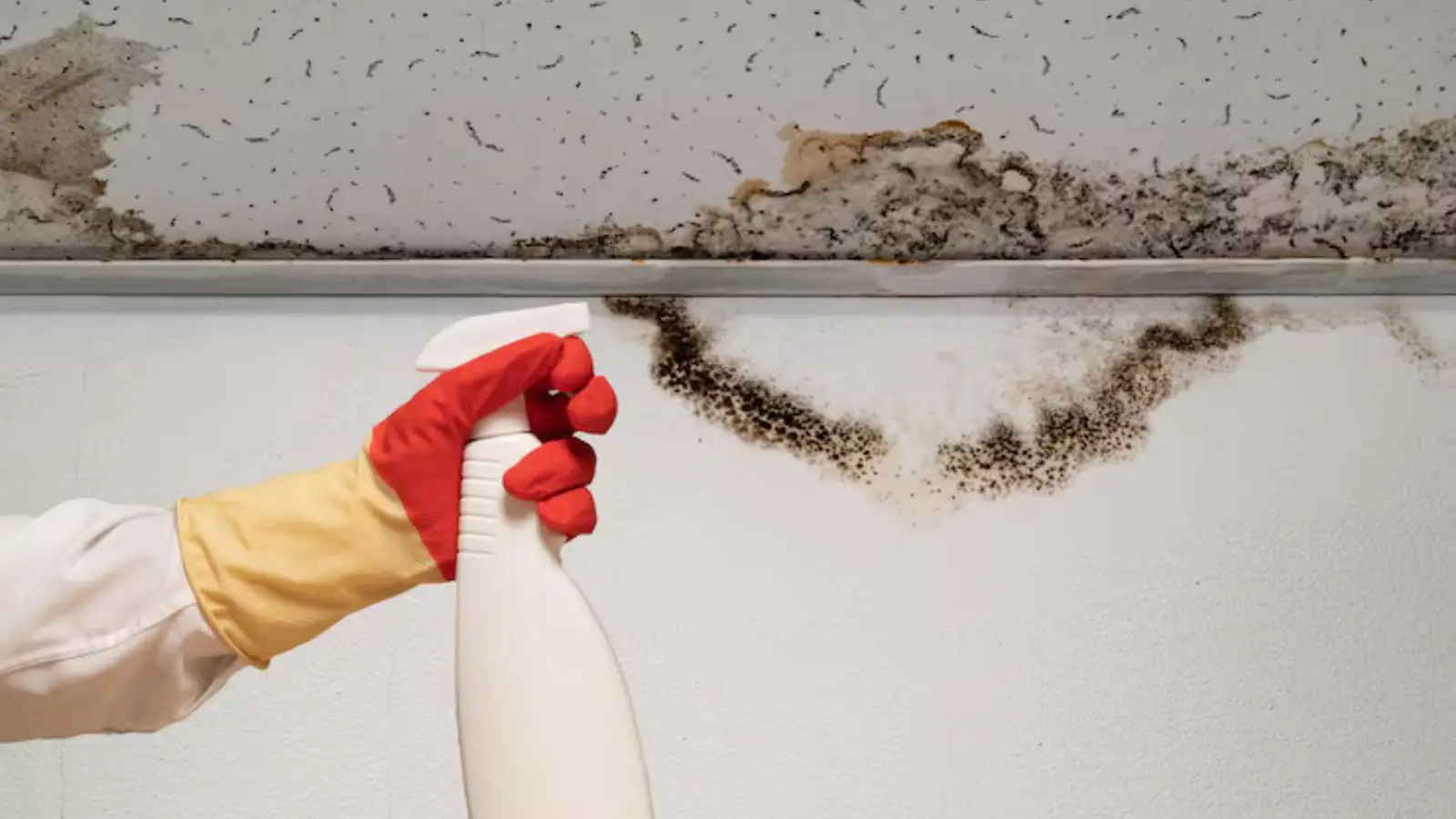
Why bathroom ceilings grow mold
Bathrooms produce steam, and steam condenses on cool surfaces. A ceiling that stays damp after showers feeds mold through the paint film, the drywall paper and any dust that has settled on the surface. The color can be black, dark green or brown, so color alone does not tell you much.
Three causes account for most cases: weak ventilation, a leak from above and a poorly sealed fixture. Finding which one you have matters, because cleaning without fixing the cause only buys a few weeks.
Check the moisture sources
- An exhaust fan that is weak, undersized or vented into the attic instead of outdoors
- Showers that run long with the door closed and no fan
- A roof or plumbing leak above the bathroom
- A failed tub or shower seal that sends water into the wall
- A cold exterior wall that attracts condensation
A simple test: hold a square of tissue under the fan while it runs. If it does not cling, the fan is moving little air. Also feel the ceiling after a shower. If it stays cool and damp for hours, humidity is lingering.
Clean it yourself or call a pro?
EPA guidance draws a rough line near ten square feet: below it a homeowner can often clean the patch, and above it, or when growth keeps returning or follows a long water event, a professional should assess the ceiling. Treat that as a guide, not a rule, since hidden growth behind the drywall can be larger than what you see.
| Situation | Reasonable path |
|---|---|
| Spots under about 10 sq ft, ceiling is firm and dry | Fix the moisture source, clean with soap and water, use gloves, goggles and an N-95 respirator |
| Ceiling is soft, stained or sagging | Stop and call a professional, since the drywall likely needs removal |
| Growth returns after cleaning | Moisture source is still active, get readings |
| Larger than about 10 sq ft or spreading | Call for remediation and clearance testing |
| Home sale or loan involved | Ask about independent clearance testing, no outcome is promised |
Never mix bleach and ammonia, and do not scrub a dry mold patch without protection, since that sends material into the air. Questions about how mold may affect your health belong with a physician.
Not sure how big it really is?
Call and describe the spots. We explain what a moisture reading and a visual check can show.
What professionals do
Professional remediation follows the ANSI/IICRC S520 standard. Crews set up containment, run negative air with HEPA filtration, remove affected drywall and clean the surrounding area. Ask whether your state licenses mold work, and ask whether the company's crews work to S520.
Our mold remediation page walks through containment and clearance testing, and our water damage cleanup page covers the wet work that comes first when a leak caused the growth.
Keeping the ceiling clean afterward
Once the moisture cause is fixed and the surface is clean and dry, small habits do most of the work. Run the fan during the shower and for a while after, wipe the ceiling and walls if water beads on them, and leave the door open so steam can leave the room.
If you repaint, choose a primer designed for damp rooms and a finish rated for bathrooms. Paint is a finish, not a fix, so use it only after the surface is clean and the cause is solved.
Check the ceiling again after a few weeks of regular showers. If dark spots return in the same place, moisture is still arriving, and a professional with a moisture meter can tell you where.
Cost factors
What you pay depends on the size of the affected ceiling, the drywall or finish involved, the containment required and any clearance testing you want. Mold coverage varies widely, so check your policy or ask your insurer. Want your real number? Call (909) 505-3870.
Common mistakes to avoid
People often reach for a spray bottle of bleach and a stiff brush the same afternoon. That can spread spores, damage the paint and leave the moisture untouched. Another frequent slip is running a ceiling fan in the bathroom and assuming it replaces an exhaust fan, when it only stirs the damp air.
A third mistake is waiting. A small patch that returns every few months is telling you that a leak, a failed seal or poor airflow is still active, and the cost of finding it rises the longer the drywall stays wet.
Yucaipa note: dry climate, damp bathrooms
Yucaipa is a Mediterranean climate with dry summers, so owners sometimes assume mold is not their problem. A bathroom makes its own humidity indoors regardless of the weather, which is why a strong fan matters year-round.
Cutting out ceiling drywall can raise a permit question, and the city's Community Development staff can answer it. If you suspect a leaking service line, call whichever provider your water bill names.
Sources: an overview of the Mediterranean climate here and the city website's department listing.
Frequently Asked Questions
No. Dust, soot and old stains can look similar. A professional check settles it.
Yes, if it vents outdoors. A fan that discharges into the attic only moves the moisture.
No. Paint does not remove the cause or the growth. Clean and dry first.
Testing helps in sales, disputes or clearance after remediation. For small, known growth it is often unnecessary.
Ask about remediation and independent clearance testing. We cannot promise a lender's decision.
Yes. See Redlands and Loma Linda.
Still have a question?
Call the 24/7 emergency line and ask. Scope and price are explained before work starts.