
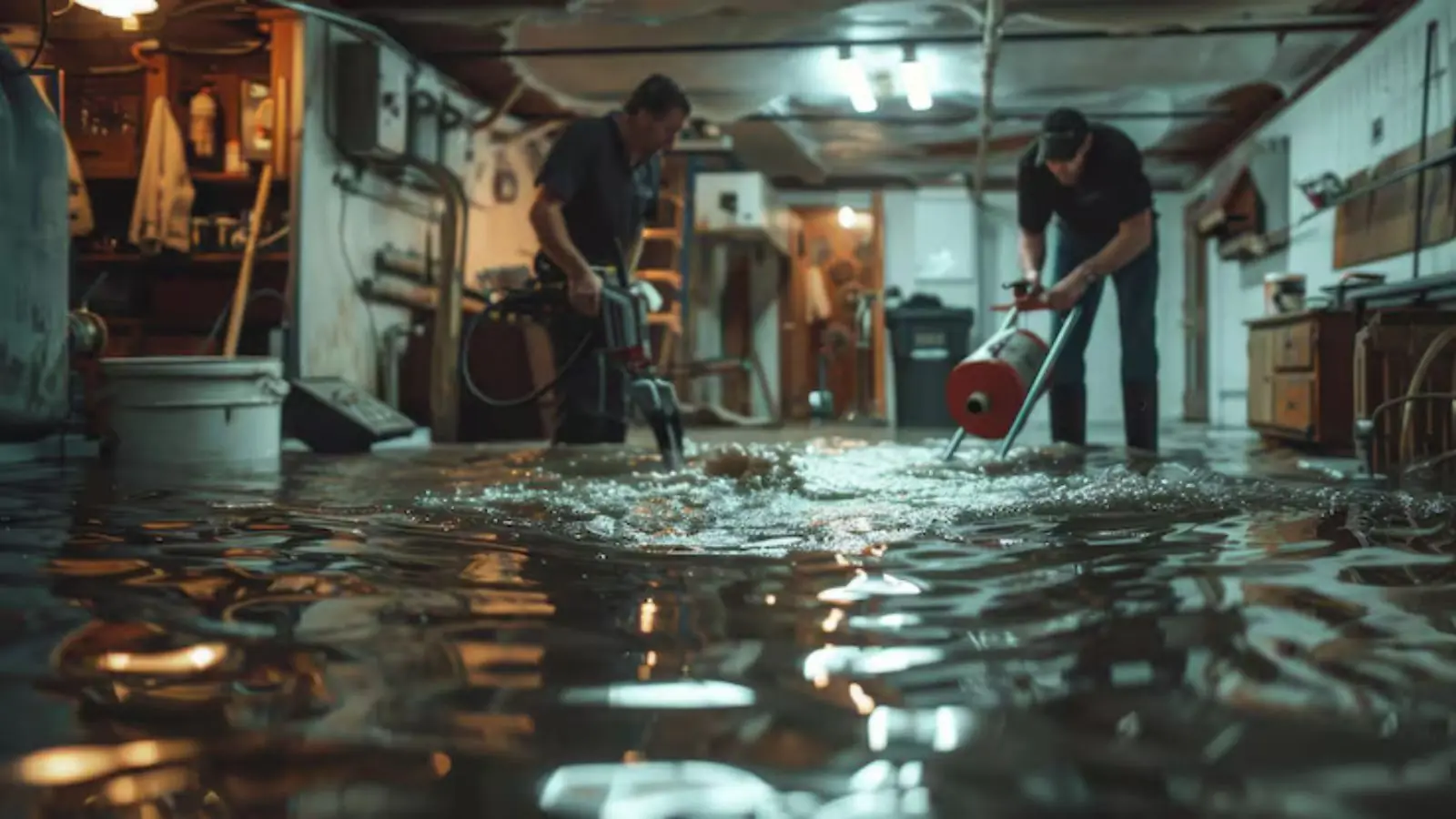
Emergency water removal in Yucaipa is the job of pumping and extracting standing water before it reaches the subfloor, the wall cavities and the contents of the room. The dispatch line answers 24/7, so a failure at midnight or on a holiday weekend gets the same response as one on a weekday afternoon.
While you wait for the crew, shut the home's main water valve or the little valve under the failed fixture, raise furniture and valuables off the soaked floor, and keep family and pets away from the water. Cut power to the wet room only when the breaker box is reachable from dry footing. If water touches outlets or the panel, phone 911 or the power utility first and us second.
Electricity and water do not mix
If you smell gas, see sparks or find water around the electrical panel, leave the building and call 911 or the gas or power utility before calling us. We will take the call once everyone is safe.
When standing water is an emergency
Any water deeper than a film on the floor, and any water that is still flowing, is an emergency. Wood, drywall and carpet pad begin absorbing within minutes, and the longer water sits, the further it travels along baseboards and into wall cavities. A few inches in a garage can be handled the same day, but water that has reached insulation or the subfloor is a race against time.
Water category changes the picture. Clean water from a supply line is called Category 1 in ANSI/IICRC S500, water with significant contamination is Category 2, and sewage or floodwater is Category 3. A washing machine overflow can start as Category 1 and turn into Category 2 within a day, which is another reason to call early. Contaminated water follows the rules on flood damage restoration, which are stricter.
What happens when the crew arrives
A technician first confirms the source is stopped and checks the area for electrical hazards. Next comes extraction, with submersible pumps once water is deep, then truck-mounted or portable extractors across carpet and hard flooring. Wet vacuums clear the corners and edges.
Once the standing water is out, moisture meters and a thermal imaging camera map where water traveled. That map tells the crew whether to lift carpet, remove baseboard or pull a section of drywall. Drying then moves to water mitigation, where air movers and dehumidifiers take over.
| Water source | Typical first step | What comes next |
|---|---|---|
| Supply line, valve or hose failure | Shut off water, extract with pump or portable unit | Moisture mapping, then structural drying |
| Appliance overflow | Extract from carpet and hard floors | Check the subfloor and cabinets for hidden moisture |
| Roof leak or storm intrusion | Extract, then contain further entry | Inspect ceiling and insulation, then repair |
| Sewage or drain backup | Stay out, call us, extract with protective gear | Removal of affected materials and sanitizing |
Water on the floor right now?
The 24/7 line is open. Call and a coordinator will tell you what to do while the crew is sent.
Burst Pipe Water Damage
Burst pipes are the most common reason people call us in the middle of the night. A cracked supply line under a kitchen or bathroom sink can release gallons an hour, a failed washing machine valve can flood a laundry room in minutes, and a split water heater supply line can soak the closet and the hallway beyond it.
The first move is always the same. Find the valve at the fixture, or the main valve for the house, and close it. Open a faucet at the lowest point to drain what is left in the line, then call. Do not run electrical appliances in the wet area, and do not use a household vacuum on water.
When we arrive, we trace the water, extract it and check the cabinet base, the flooring layers and the wall behind the fixture. Many sink and valve failures send water into the cabinet toe kick, where it spreads without showing on the surface for days. A thermal imaging pass catches that before it becomes a mold question later.
Crawl Space and Whole-House Flooding
Water in a crawl space is easy to miss because nobody goes down there until a floor feels soft or a smell appears. Water from a leaking pipe, a failed drain or storm runoff can sit under the house for days. Extraction there uses compact pumps and hoses fed through the access hatch, followed by drying equipment sized to the space.
Whole-house flooding, such as a failed main line or a storm that overwhelms drainage, is handled in zones. Crews extract room by room, starting where the water is deepest, and keep records of each zone for insurance documentation. For groundwater and mud, see flood damage restoration.
Local note for Yucaipa homeowners
In Yucaipa the Yucaipa Valley Water District supplies water and sewer service across the city and in Calimesa, and the bill that arrives each cycle names your provider. If you are not sure where your main shutoff is, find it now rather than during a leak, and mark it. Homes in Calimesa, just south across Calimesa Creek, often share the same district, so the same advice applies there.
What affects the cost of water removal
- Water category, because contaminated water needs protective gear and more removal.
- Depth and area of the water, which determine how long pumping and extraction take.
- Floor materials, since carpet and pad come out where hardwood or tile can often be dried in place.
- Drying days after extraction, covering the air movers and dehumidifiers left running.
- Rebuild scope once the area is dry, such as flooring or drywall replacement.
Want your real number? Call (909) 505-3870, and we explain the price before any pump is started. A burst pipe is the kind of sudden event homeowners policies often cover. Long-running leaks and neglect usually are not, and flood tends to need its own policy, so read your policy or ask your insurer.
Take photos of the water before extraction begins, keep receipts for emergency costs and write down what was damaged. Our written scope will add moisture readings and equipment logs, which makes the claim conversation simpler.
Emergency Water Removal Questions
Yes. A coordinator picks up the dispatch line at midnight on a Sunday as readily as on a Tuesday afternoon. Crews go out as soon as one is free, and if there is a wait you will hear about it up front, along with steps to hold the water back.
As fast as possible. Materials start absorbing within minutes, and after a day or two drywall and insulation may need removal instead of drying. Calling early often means more of the structure can be saved.
For a small spill on a hard floor, yes. For anything deeper, or any water that touched carpet pad, walls or electrical items, the water travels further than you can see and needs moisture meters to find it.
Close the water valve, lift valuables, open a low faucet if a supply line burst, and stay out of water near outlets. Photograph everything before it is moved.
No. Clean water can degrade within a day as it picks up dust and materials, and wood and drywall keep absorbing. Overnight water often means more removal later.
Yes, with stricter safety rules. See flood damage restoration, and stay out of the area until a crew in protective gear arrives.
Still have a question?
Call the 24/7 emergency line and ask. Scope and price are explained before work starts.