
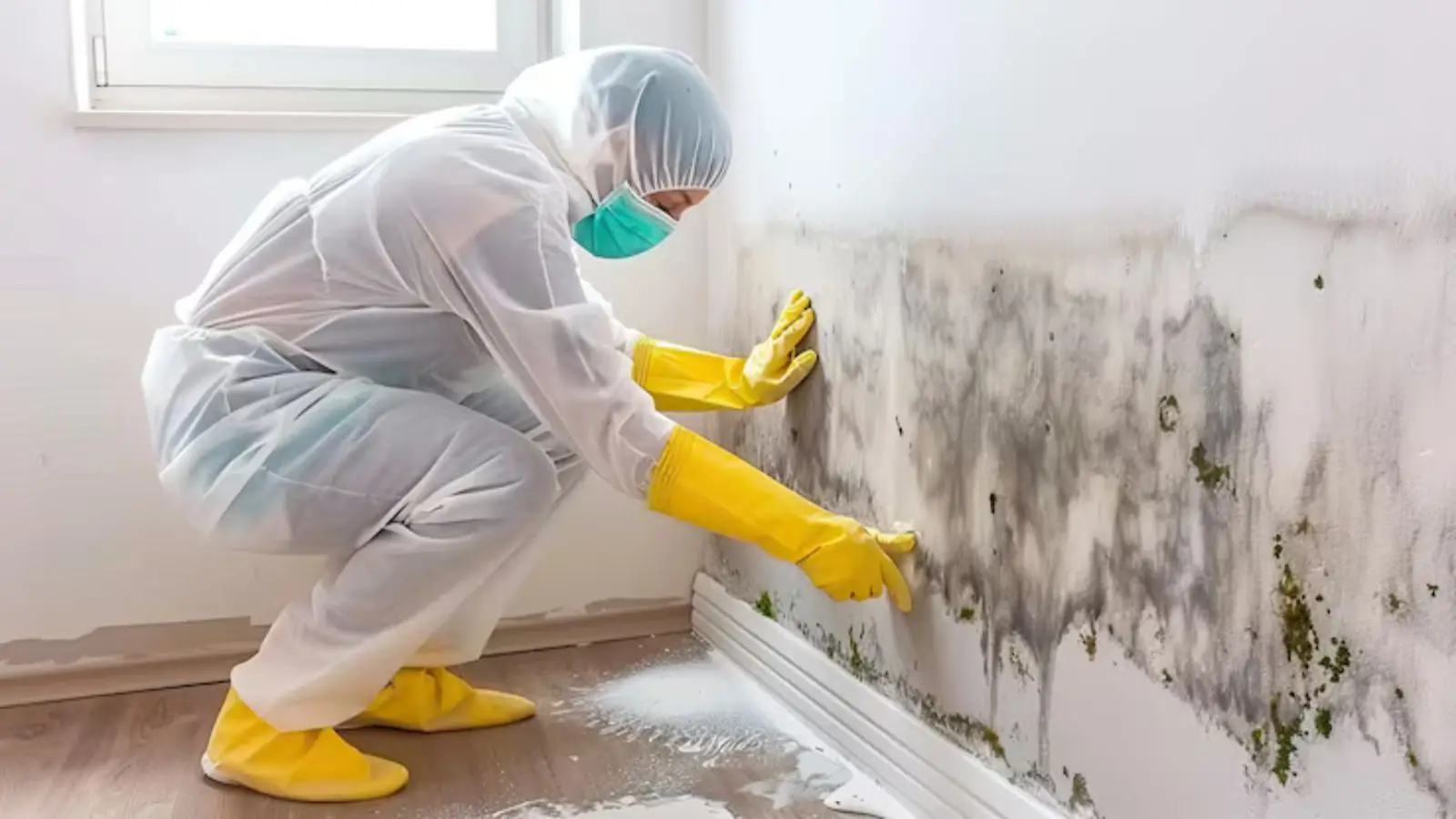
Mold remediation in Yucaipa is the process of containing a moldy area, removing the growth and affected materials, cleaning the surrounding surfaces and confirming the space is ready for repair. It follows ANSI/IICRC S520, the published industry standard for mold remediation, and it only works when the moisture that fed the mold has been fixed. Our line is open 24/7, and a same-day visit is often possible.
Most mold calls come from a recent leak, such as a toilet or sink supply line, an air conditioner condensate line, a roof or a shower that stayed wet. If you can see mold, keep the area closed, do not stir it up with a dry brush or fan, and call. Questions about health belong with a physician, and we do not diagnose or give medical advice.
I see dark spots on the ceiling and the room smells musty, what is it?
Dark spots on a bathroom ceiling, a fuzzy patch in a closet corner or a musty smell in a lower room are the usual signs people search for. The cause is almost always moisture that stayed in place, either from a leak or from condensation. The trade term for dealing with it is mold remediation, and the first step is finding the water, not the mold.
Surface stains can be mildew, dirt or mold, and you cannot always tell by looking. A technician checks moisture with meters and a thermal imaging camera, looks for hidden growth where water traveled and explains what the area needs. If testing is needed, see the section below. If water is still active, emergency water removal comes first.
How remediation works
Fix the moisture
The leak or condensation source is stopped and the area is dried. Without this step mold returns to the same spot.
Contain
Plastic sheeting and negative air machines keep spores from drifting into other rooms.
Remove
Damaged drywall and porous materials are bagged and removed, and hard surfaces are cleaned with HEPA vacuums and damp wiping.
Verify
Moisture readings are taken, and clearance testing can be added for sales or loans.
Crews wear respirators, gloves and protective clothing, and HEPA air scrubbers run during the work. We do not use fogging as a substitute for removal, because treating surface growth without removing materials rarely solves the problem. After removal, repair is covered under water damage repair.
Mold Removal and Black Mold Cleanup
Black mold is a common name for dark-colored growth, and color alone does not tell you the type. For remediation purposes, any visible growth is handled the same way: contain, remove and clean. Calling it black mold does not change the steps, and it does not by itself tell you how serious the situation is.
EPA guidance says a homeowner can generally handle an area smaller than about 10 square feet, wearing gloves, goggles and an N-95 respirator, and never mixing bleach with ammonia. Larger areas, growth inside walls and any area linked to sewage or floodwater call for professional help. Porous materials such as ceiling tile, carpet and insulation usually have to go.
On wood framing, crews remove surface growth with HEPA sanding or wire brushing in containment, then clean and dry the wood. If framing is structurally damaged, it is replaced. Bathroom ceilings, closets and the walls behind furniture are the spots we see most often in these jobs.
Mold After Water Damage
Mold can begin to grow in 24 to 48 hours on materials that stay wet, according to EPA guidance. That is why water mitigation matters: fast drying gives mold less time to start. When drying is delayed or done on top of wet drywall, mold may follow days or weeks later.
If you had a leak in the past and now smell mustiness, there may be moisture trapped behind a wall or under flooring. We check the area with meters and thermal imaging, open a small section if needed and report what we find. If the growth is limited, remediation can be small and quick. If it has spread, containment grows in step.
| Situation | Usual approach | Why |
|---|---|---|
| Small surface spot under about 10 sq ft on a hard surface | Homeowner cleaning with protective gear, after fixing the moisture | Follows EPA homeowner guidance |
| Mold on drywall, ceiling tile or carpet | Remove and replace the material | Porous materials hold growth |
| Growth inside a wall or large area | Professional containment and removal | Disturbing it can spread spores |
| Mold after sewage or flood | Professional work with safety steps | Contaminated water adds hazards |
Mold in the house after a leak?
Call the 24/7 line. A coordinator talks through what the area needs and what the job will involve before anything begins.
Mold Testing and Clearance
Testing answers specific questions: is this mold, how widespread is it and is the area clean after remediation. Mold inspection starts with a visual check and moisture mapping, and sampling may be added when growth is hidden or a document is needed. Testing does not replace fixing the moisture source.
Clearance testing after removal is done to confirm the work area meets a stated standard. It is commonly requested when a home is being sold or a lender asks for documentation. We explain what clearance involves and recommend an independent tester, so the person who tests is not the person who did the removal. We cannot predict what a buyer or lender will accept.
Ask any mold company whether its crews follow ANSI/IICRC S520 and whether your state licenses mold work. Rules differ, so ask before hiring.
Mold questions in Yucaipa homes
Winter storms are a common trigger, since roof and window leaks can soak insulation. Rebuilding after removal can raise permit questions, and City of Yucaipa staff are the ones to ask. If you live in Mentone, your contact is the county rather than a city office.
What affects the cost of mold remediation
- Area and height of the affected material.
- Whether growth is on the surface or inside walls.
- Containment size and air scrubber days.
- Drying needed to remove the moisture source.
- Testing, clearance and rebuild scope.
Want your real number? Call (909) 505-3870. Scope and price are laid out before containment goes up. Mold that follows a sudden, accidental leak may fall under your policy, mold from a slow leak or neglect often does not, and mold linked to flooding is usually excluded. Your insurer can confirm.
Mold Remediation Questions
The line is open 24/7. Mold itself is rarely a midnight emergency, but the leak that caused it can be. A crew can usually visit that same day.
It depends on area, material, containment and drying. The estimate depends on what is found, and a call to (909) 505-3870 gets you a clear next step.
Not always. Visible growth is handled the same way. Testing helps with hidden growth, documentation or clearance after removal.
Bleach does not solve the moisture problem and should never be mixed with ammonia. For small hard-surface areas, EPA guidance suggests detergent and water with protective gear. Porous materials usually need removal.
Small jobs take a day or two. Larger ones with containment, drying and rebuild take longer. We give a timeline after assessment.
Mold removal is the physical step. Remediation includes fixing moisture, containment, removal, cleaning and verification.
Still have a question?
Call the 24/7 emergency line and ask. Scope and price are explained before work starts.