
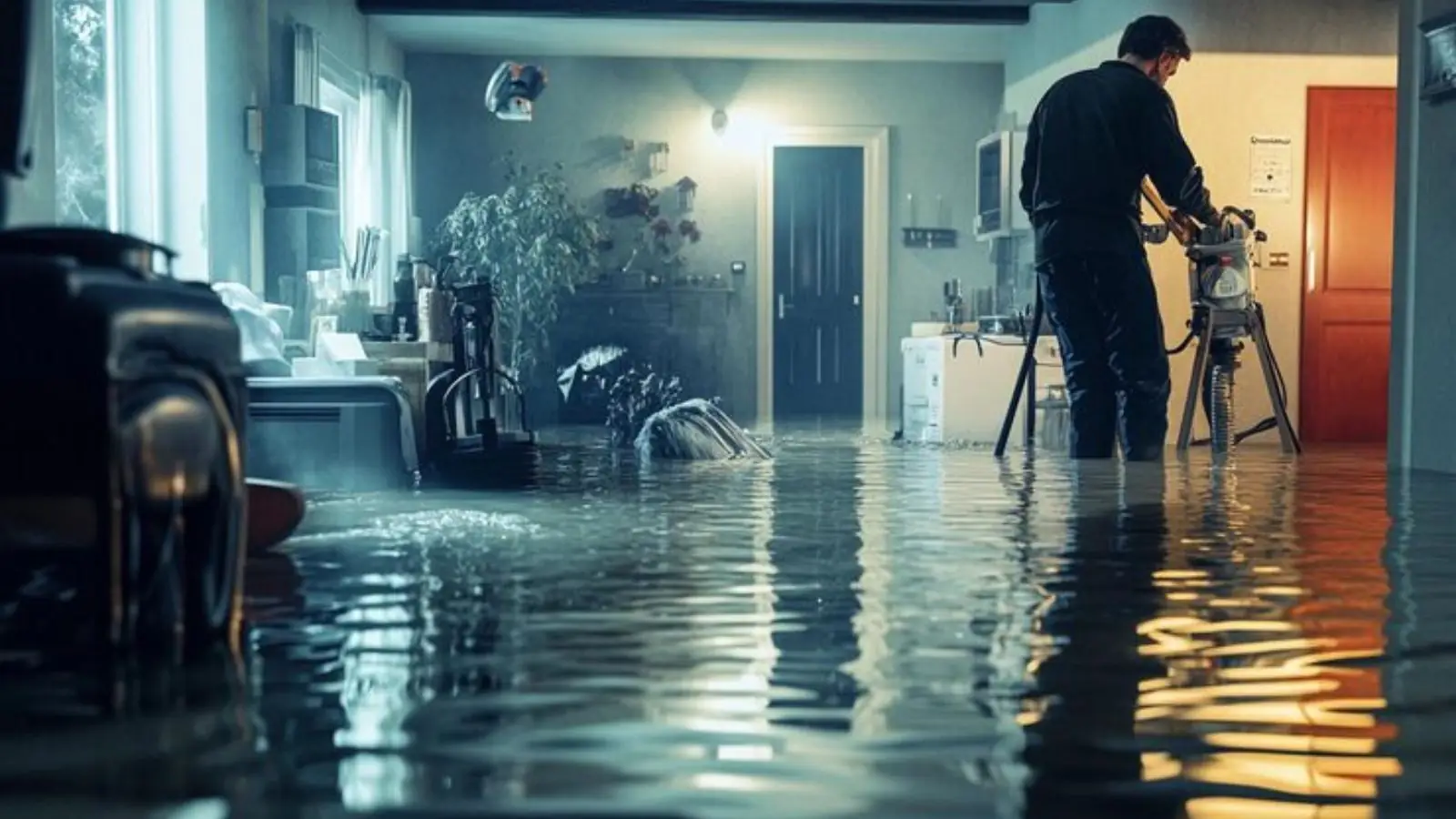
Water mitigation is the damage-control phase of a water loss, covering the first 24 to 72 hours when moisture is still moving through the building. The goal is simple: limit how far the water travels, protect materials that can be saved and set up drying before mold or swelling begins. Our 24/7 emergency line means mitigation can begin the same night a problem is found, with same-day response when crews are available.
If you are reading this with an active leak, shut off the water, lift belongings off wet surfaces and keep people out of any water near electrical outlets. Take photos before anything is moved. Then call, because every hour of delay gives water more time to reach insulation and framing.
My ceiling is stained and my floor feels damp, what now?
That combination usually means water has gone further than the stain shows. A brown ring on the ceiling, a floor that feels cool or soft underfoot, a baseboard that has started to lift and a musty smell are all signs of trapped moisture. People often search for ways to dry a wet wall, stop a ceiling leak or save wet carpet when the trade name for that job is water mitigation.
In practice, mitigation means finding the water first. A technician uses moisture meters to read the surface and a thermal imaging camera to spot cool, wet areas behind it. Once the wet zone is mapped, the crew decides what to dry in place and what to remove.
When water damage becomes an emergency
Mitigation turns urgent as soon as water has soaked porous materials such as drywall, insulation or carpet pad. Those materials hold water like a sponge, and after roughly 24 to 48 hours the risk of mold growth rises, according to EPA guidance on moisture and mold. Getting equipment running inside that window gives drying the best chance.
Mitigation also matters after water has been pumped out. Standing water is only part of the problem, because moisture left in wall cavities and under floors keeps working after the surface looks dry. For active pooling, start with emergency water removal, then move straight into drying.
Structural Drying
Structural drying is the engineered process of removing moisture from framing, subfloors, wall cavities and flooring until readings match a dry standard. It relies on airflow and low humidity, not heat alone. Axial and centrifugal air movers sweep air over wet surfaces, while LGR and desiccant dehumidifiers pull the moisture out of the air so it cannot settle back onto materials.
Wall cavities need special handling. A technician may drill small holes or remove baseboard to push air into the space, or use a floor drying mat system under hardwood. Placement matters more than the number of machines, because air has to move across every wet surface.
Drying is measured, not guessed. Technicians record moisture readings daily, adjust equipment and keep going until the structure reaches its dry goal, often within three to five days for typical losses. Longer for dense materials. These readings are also the proof insurers look for when a job closes.
| Tool | Job it does | When it is used |
|---|---|---|
| Moisture meter | Reads moisture content in drywall, wood and subfloor | At the start and at every daily check |
| Thermal imaging camera | Shows cool, wet areas behind finished surfaces | During assessment and to confirm drying |
| Axial or centrifugal air mover | Moves air across wet surfaces and into cavities | Throughout the drying period |
| LGR or desiccant dehumidifier | Removes moisture from the air | Throughout the drying period |
| Extraction unit | Pulls remaining water out of carpet and hard floors | Early, before drying equipment is set |
Water stopped but damage still spreading?
Call the 24/7 line. A coordinator walks through the drying steps and what the job is likely to include before work begins.
What mitigation does and does not include
Mitigation protects the structure and stops the damage from growing. It does not rebuild the room. Once drying goals are met, the next stage is water damage repair, where drywall, flooring and paint are put back. Materials that cannot be saved, such as saturated carpet pad, are removed during water damage cleanup to keep moisture from lingering.
We are open about limits. Equipment will not bring back wood that has warped or insulation that has been soaked with contaminated water, and we will say so rather than leave machines running on material that cannot recover.
Local note for Yucaipa
Winter storms bring the roof and window leaks that start many mitigation calls here. Winter rain arrives in a few strong storms across Yucaipa, so water often enters at weak points all at once. Before structural repairs after a loss, the City of Yucaipa Community Development department can say what needs a permit. Neighbors in Mentone deal with the county instead, since that community is unincorporated.
What affects the cost of mitigation
- Water category, because contaminated water adds protective steps and material removal.
- Affected area and the number of rooms and wall cavities involved.
- Materials, since dense hardwood and plaster dry slower than drywall.
- Days of equipment, driven by how deep the moisture reached.
- Whether materials must be removed before repair can begin.
Want your real number? Call (909) 505-3870. We lay out the drying plan and its price before equipment goes in. Homeowners insurance often responds to sudden and accidental losses, but long-running leaks and neglect often fall outside it, and flood generally requires separate flood coverage. Your policy or your insurer has the final word.
What to do before the crew arrives
- Shut off the main water valve if a supply line is the source.
- Lift rugs, electronics and paper off wet floors, and prop furniture legs on foil or blocks.
- Leave wet drywall and carpet in place, because the crew needs to read moisture in them.
- Skip household fans pointed at wet walls until the crew has mapped where the moisture is.
- Take date-stamped photos and video from several angles.
Water Mitigation Questions
Yes. Drying equipment can go in on a Saturday night as well as a Monday morning. When no crew is free right away, the coordinator says so and talks you through protecting the room until someone arrives.
Mitigation limits damage in the first days through extraction, moisture mapping and drying. Restoration is the full path, including cleanup and rebuilding. Mitigation is one stage of it.
Moisture meters measure materials against a dry goal set at the start of the job. Technicians record readings daily and the equipment comes out only when readings meet the goal.
For a small, clean spill, possibly. For anything inside walls, under flooring or lasting more than a day, hidden moisture needs a meter and thermal imaging to find it.
No. Insurers generally expect you to prevent further damage. Photograph everything, keep receipts and start drying, then contact your insurer. Check your policy for specific language.
Typical losses dry in about three to five days, but dense materials and large areas take longer. You will hear the equipment, and daily readings show progress.
Still have a question?
Call the 24/7 emergency line and ask. Scope and price are explained before work starts.