
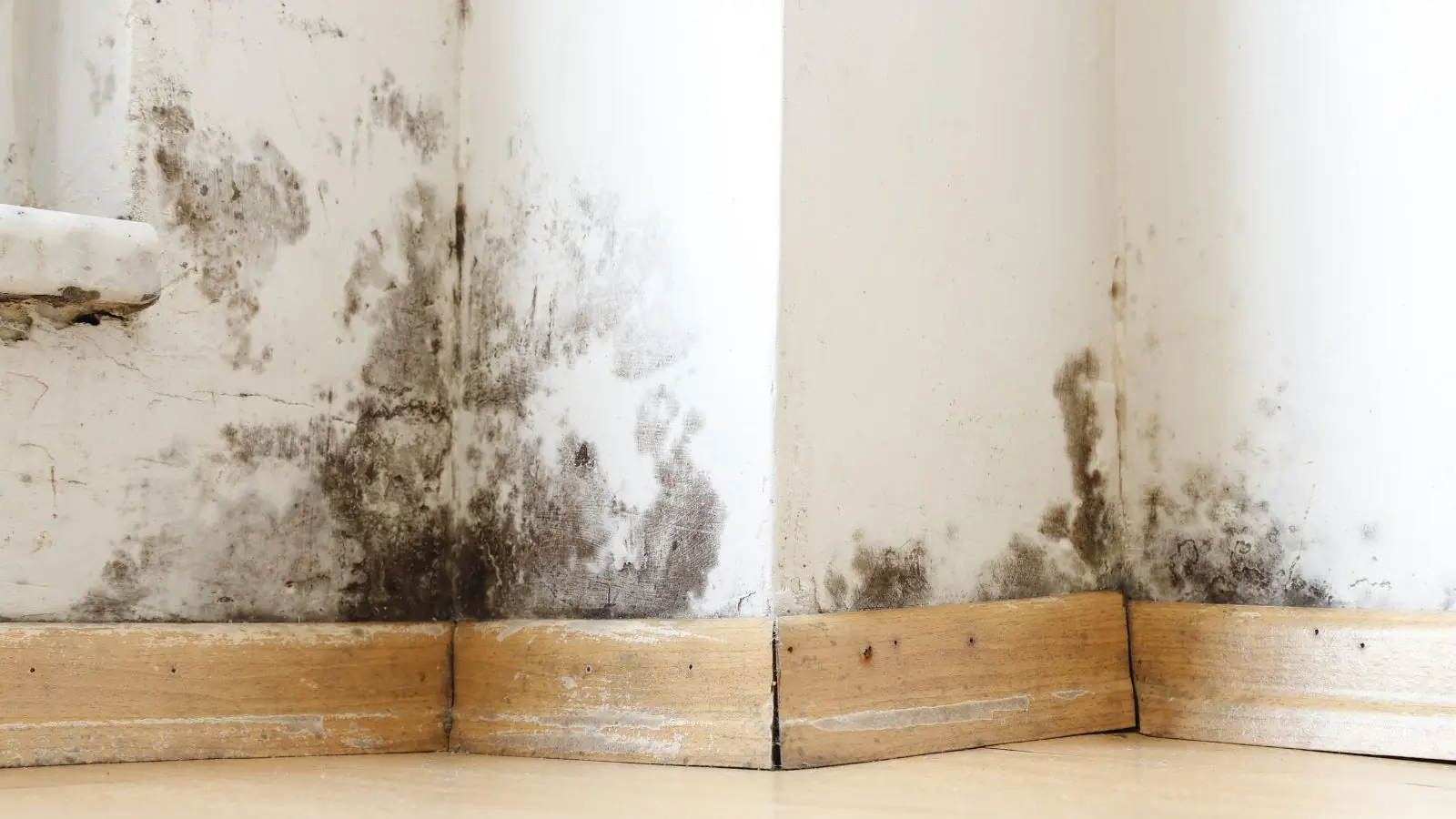
Wood is porous, and that changes the plan
On glass or tile, mold sits on the surface and wipes away. Wood drinks moisture into its grain, so growth can sit below what the eye sees. That is why the method depends on what kind of wood it is and how long it has been damp.
Before any cleaning, identify the water source and dry the wood. EPA guidance says moisture control is the key, and a damp board will grow mold again no matter what is sprayed on it. A moisture meter pressed against the wood gives you a number to work from.
Three kinds of wood, three approaches
Finished wood
Painted or sealed trim, furniture and doors usually have mold on the coating, not in the grain. Detergent, water and a soft brush often work, followed by thorough drying.
Unfinished wood
Bare boards, shelving and pergola timbers absorb more. Surface cleaning may help, but sanding or replacing can be needed when stains run deep.
Structural wood
Studs, joists and subfloor sit in walls and crawl spaces. Cleaning, drying and sometimes sanding are done in containment, and weak or rotted pieces are replaced.
Painted wood is the easy case. Raw lumber in a damp garage or an outdoor patio cover is harder, because the growth reaches into the wood fibers. Framing is a professional job whenever the area is large, since the tools and containment matter.
Cleaning steps for small areas of finished or lightly stained wood
- Suit up with gloves, eye protection and an N-95 respirator, then get air moving through the space.
- Mist the surface lightly so growth does not become airborne, then wipe with detergent and water.
- Rinse the cloth often and bag it afterward.
- Dry with towels and then a fan or dehumidifier until a moisture meter reads normal for that wood.
- Check again after a week for stains, smell or soft spots.
Bleach is not a routine EPA recommendation, and it must never meet ammonia. If the wood is soft when pressed with a screwdriver tip, the problem has gone beyond mold. Soft wood is rot, and it needs replacement.
Moisture readings: the deciding number
| Condition | What it suggests | Typical next step |
|---|---|---|
| Surface staining, wood reads normal, hard to the touch | Growth is mostly on the surface | Clean, dry and monitor |
| Stains deep in the grain, wood reads normal | Growth went below the surface | Sanding by a professional, or replacement of the piece |
| Wood reads high, area feels damp | The source is active | Fix the source and dry before any cleaning |
| Wood is soft or crumbles | Decay, not just mold | Replace the piece |
| Large area of framing or subfloor | Scope beyond a home project | Professional containment and removal |
Sanding creates dust, so it belongs in a contained setup with HEPA filtration for anything beyond a small piece. Crews doing larger jobs work to ANSI/IICRC S520, and you are free to ask any company if theirs do. Our mold remediation team handles framing and crawl space jobs this way.
Where wood stays damp in a home
- Crawl space joists and subfloor near a leaking supply line or poor drainage
- Wall framing behind a shower, a window or a leaking roof edge
- Cabinet bases under a sink with a slow drip
- Patio covers and pergolas that stay wet through winter rain
Once the moisture is gone, water mitigation equipment such as air movers and dehumidifiers keeps wood from rewetting. Homes in Mentone and Beaumont often have older wood decks and trim that benefit from an annual check.
Winter rain, summer dryness and exposed Yucaipa wood
Yucaipa has a Mediterranean climate, with most of its rain in winter and hot dry summers. Wood that is exposed to the weather, such as a patio cover, gets soaked in the rainy months and dries out in summer, so mold on outdoor timber often shows up in late winter.
That pattern is a cue for a practical habit. Look over exposed wood after the rainy season, and check that it can drain and dry. Wood that stays shaded and wet all year, such as framing near a leaking fixture, is the bigger worry.
Source type: climate classification from public climate data.
Not sure how deep it goes?
Call the 24/7 line. A moisture survey tells you what is inside the wood.
Cost depends on how much wood is involved, how far the staining goes, access, drying and any rebuilding. Call (909) 505-3870 when you want an actual number for your wood. Coverage rides on the policy and on how the wood got wet, so your insurer is the one to ask.
What to do before cleaning moldy wood
- Dry the wood first and confirm the moisture source is fixed.
- Put on gloves, eye protection and an N-95 respirator.
- Open a window or run a fan that exhausts outdoors, not into the house.
- Test a hidden spot before using any cleaner on finished wood.
- Call a professional if the wood is structural framing or the growth keeps spreading.
Frequently Asked Questions
Neither is a routine EPA recommendation for wood. Detergent and water with a drying step is the standard approach, and bleach must never be mixed with ammonia.
It can remove surface growth, but it creates dust and does nothing if the wood stays damp. For more than a small piece, use containment and HEPA filtration.
When it is soft, crumbling or deeply stained after cleaning, or when it stays damp after the source is fixed.
Small spots may be, but crawl spaces are tight and the framing is structural. Professional containment and moisture readings are safer for anything larger.
Yes, exposed wood can stay damp through the rainy months. Check drainage and airflow, clean small patches with detergent and water, and re-check after it dries out.
Still have a question?
Call the 24/7 emergency line and ask. Scope and price are explained before work starts.