
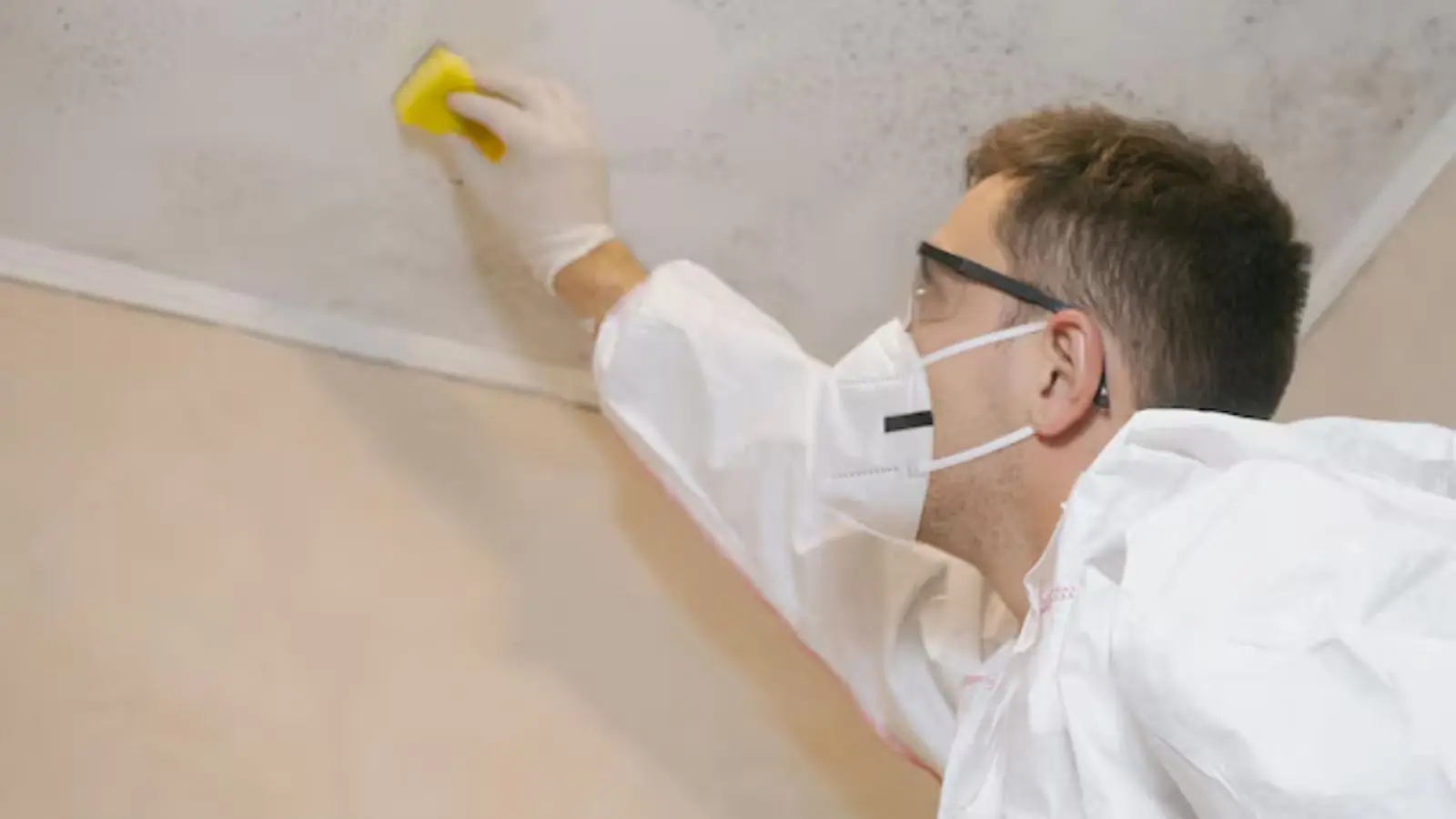
Start with the moisture, not the stain
Picture a ceiling corner over the shower with gray-black freckles that came back after the last scrub. The stain is the symptom, and the cause is moisture that has nowhere to go. EPA guidance puts it plainly: moisture control is the key to mold control, so the cleaning only lasts if the damp is solved.
Check the exhaust fan first. If it is weak, ducted into the attic without an outlet or switched off after showers, steam condenses on the coolest surface, which is usually the ceiling. A drip stain with a ring around it points to a leak above, from a roof, a shower pan or a supply line, and that is a repair job before it is a cleaning job.
Decide whether this is a do-it-yourself job
| What you see | Reasonable approach | Why |
|---|---|---|
| A patch smaller than about 10 square feet on a painted surface | Careful cleaning at home using EPA-style steps | EPA treats a patch this small as something a homeowner can usually manage |
| Spots return within weeks after cleaning | Stop and find the moisture source | A recurring patch means the source is still active |
| Ceiling drywall is soft, sagging or crumbly | Call a professional | The material is wet through and probably needs removal |
| The growth is wider than a large bath towel, or it has spread into the attic | Call a professional | Larger areas call for containment and protective setup |
| Sewage or floodwater caused the damp | Call a professional | Contaminated water needs a different safety plan |
The steps
Gear up and ventilate
Wear gloves, goggles and an N-95 respirator, as EPA suggests for cleanup. Run the fan or open a window, and keep the door to the rest of the house closed so spores do not travel.
Protect the room
Lay plastic sheeting under the work area and over the tub and floor. Cover a nearby vent with tape so cleaning dust stays put.
Mist, do not scrub dry
Lightly mist the area with water and detergent so loose growth does not become airborne. Dry scraping sends particles into the air.
Clean with detergent and water
Wipe with a cloth or soft brush in small sections, rinsing the cloth often. EPA guidance does not call for bleach as a routine step, and you must never mix bleach with ammonia, since the fumes are dangerous.
Dry thoroughly
Dry the surface with towels, then run the fan and a small dehumidifier until the ceiling feels dry to the touch. Mold needs moisture, so a damp surface invites the same spots back.
Bag and dispose
Seal rags, plastic and the sponge in a bag before they leave the room. Wash your hands and launder clothes separately.
Porous materials are the exception. Textured ceiling paint, acoustic texture and soaked drywall can hold growth beneath the surface, and a surface wipe will not reach it. When that is the case, cutting out and replacing the material is the honest fix.
Prevent a repeat visit
- Run the exhaust fan during every shower and for a while afterward.
- Check that the fan vents outside, not into the attic space.
- Fix drips from the shower valve, supply lines and roof flashing promptly.
- Use a moisture meter, or ask a pro to, if a spot returns.
If the cause was a leak that soaked the ceiling, water damage repair handles the drywall and paint once the area is dry. Homes in Mentone and Calimesa see the same bathroom patterns, since steam and slow leaks do not follow city limits.
Yucaipa weather and your bathroom ceiling
Yucaipa has a Mediterranean climate, with most rain falling in winter and hot dry summers. A ceiling stain that shows up after the first winter storms is more likely a roof or flashing leak, while a stain that spreads in the dry months usually traces back to shower steam or a plumbing drip.
Knowing which season the spot appeared in helps you or a technician narrow the cause quickly. If new ceiling drywall is on the list, a short call to the city's Community Development office will tell you whether a permit applies.
Source type: public climate classification and the city department listing.
Not sure how big it really is?
Call the 24/7 line. A moisture meter tells the real story behind the paint.
Health questions belong to a physician, not a cleaning guide. If anyone in the home has concerns about mold exposure, talk to a doctor, and leave larger cleanups to people trained for them. Professional work follows the ANSI/IICRC S520 standard for mold remediation, and you can ask any company whether its crews do. Our mold remediation crews take over when the patch outgrows a weekend job.
Safety steps before you reach for the sponge
- Switch off power to bathroom lights and fans you will be working near.
- Use a stable stepladder and keep your face below the work area to limit falling debris.
- Wear gloves, goggles and an N-95 respirator.
- Bag wiped materials and cloths before carrying them through the house.
- Do not scrub if the drywall is soft or crumbling. That calls for a professional.
Frequently Asked Questions
No. Paint on top of damp or living growth hides the problem and often peels. Clean, dry and repair the surface first, and fix the moisture source.
EPA guidance does not call for bleach as a routine step, and bleach must never be mixed with ammonia. Detergent and water on non-porous surfaces is the standard starting point.
Soft or sagging drywall, a musty smell that persists after cleaning and spots that keep returning are clues. A moisture meter or thermal camera reading confirms where the damp is.
Not usually for a small visible patch. Testing is a separate question, and it makes more sense for larger or hidden growth or for a sale or loan requirement.
Not necessarily. A stain that appears after winter storms often points to the roof, while a spot that spreads in dry months more often traces to steam or a plumbing drip. Noting the timing helps narrow the cause.
Still have a question?
Call the 24/7 emergency line and ask. Scope and price are explained before work starts.