
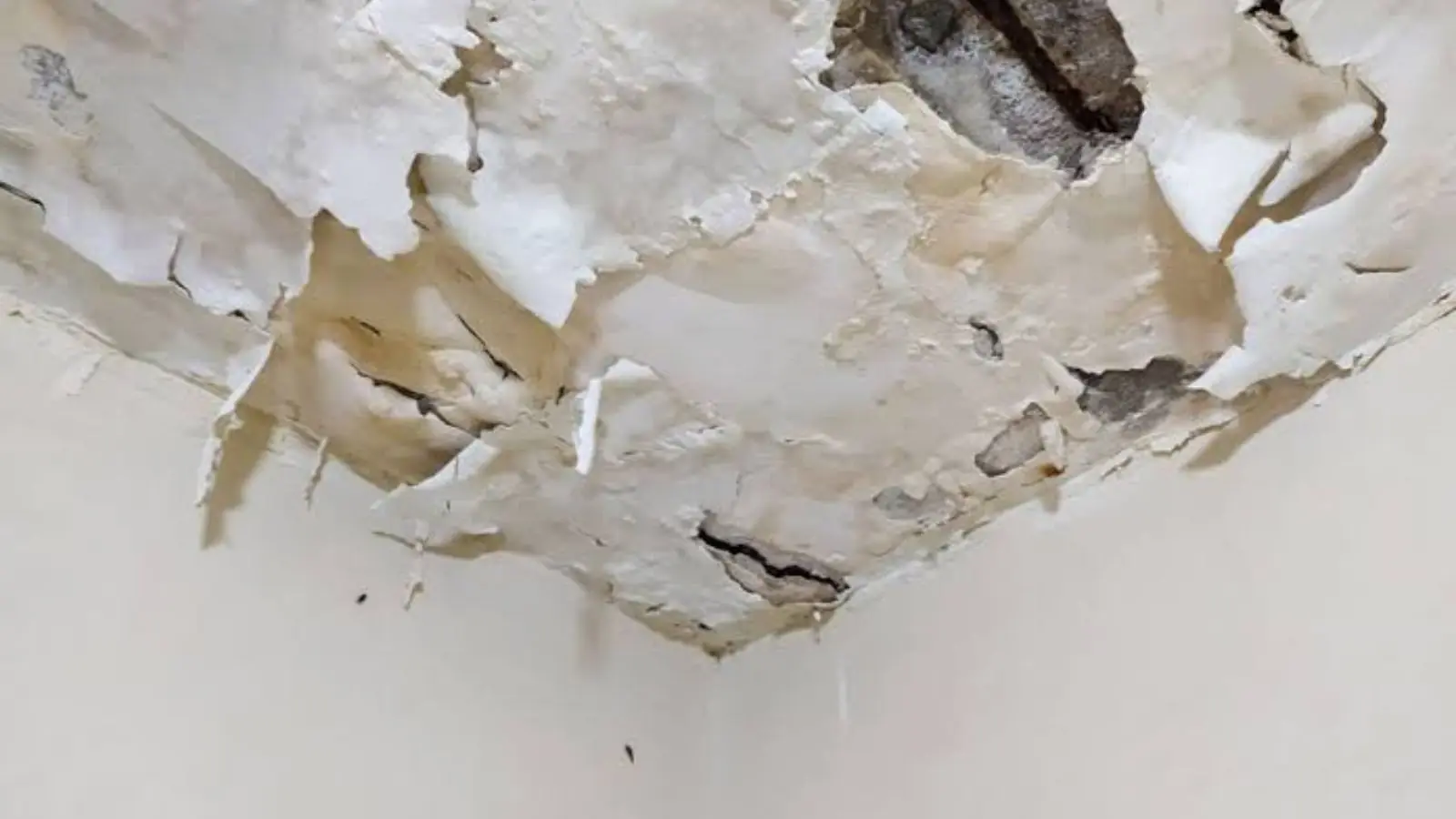
Before you touch the ceiling
A ceiling repair only holds if the water has stopped and the material above it is dry. Painting over a damp stain locks moisture in and invites the stain back. So the first job is finding the source, which may be a roof leak, a pipe in the floor above or a condensate line.
If you have not done that yet, read our water damage repair overview first, then come back to this sequence.
Sagging or bulging ceiling
A ceiling that bulges can hold a surprising amount of water. Stay out from under it, keep people and pets away, shut off the room's breaker only if the panel is dry and easy to reach, and puncture it only if a professional tells you to. Water and light fixtures do not mix.
Confirm it is dry
Press the area gently with a gloved hand. If it feels cool or soft, it is not ready. A moisture meter gives a better answer, and a thermal imaging camera can show wet insulation above the drywall that you cannot see.
Dry readings should match an unaffected area of the same ceiling. If they do not, run a dehumidifier and a fan for another day or two. Rushing this step is the most common reason repairs fail.
The repair sequence
Cut out bad material
Remove drywall that is soft, sagging or crumbling, back to solid framing.
Check the cavity
Look for wet insulation, rust on fasteners or dark staining on joists. Replace wet insulation.
Patch and tape
Install new drywall, tape the seams and apply joint compound in thin coats.
Prime and paint
Seal with a stain-blocking primer before the finish coat so old marks cannot bleed through.
Sand lightly between coats of compound and wipe away dust. For popcorn or knockdown textures, match the texture before priming, or the patch will show under raking light.
Stain, bubble or sag: what each means
| Sign | What it usually means | Typical response |
|---|---|---|
| Brown ring stain, dry | Old or one-time leak | Confirm dry, prime with stain blocker, repaint |
| Spreading stain, damp | Active leak | Find and stop the source, dry, then repair |
| Bubble or blister in paint | Water trapped behind the surface | Open carefully, dry the cavity, patch |
| Sag or bulge | Water-heavy drywall | Stay clear, call a professional, avoid power in the room |
| Musty smell | Hidden moisture, possible mold | Get readings, see mold remediation |
Not sure the ceiling is dry?
Call and we can explain how moisture readings work and what a dry ceiling should show.
Tools and materials worth having
A small patch does not need a truck full of gear. Gather a utility knife, a drywall saw, a putty knife and a wider taping knife, plus a sanding sponge. For materials, buy a piece of drywall matched to your ceiling thickness, paper or mesh tape, joint compound and a stain-blocking primer.
- A dust mask and safety glasses, since old ceilings shed debris when cut
- A drop cloth, because ceiling work is messy
- A sturdy ladder placed away from any wet floor
- A moisture meter if you want a number, not a guess
If the ceiling is high, vaulted or covered in an older texture, matching the finish gets harder, and that alone is a fair reason to hand the job to someone who does it weekly.
When to hand it to a pro
If the damaged area is larger than a few square feet, if insulation was soaked, or if there is any chance the water was contaminated, a crew with the right equipment saves time. They can dry the cavity properly and document the damage for your insurer. If a leak came from plumbing, a plumber should fix the line before anyone patches.
For homes near us, our Mentone and Redlands pages describe the same service you can expect in Yucaipa.
Cost factors
Ceiling repair cost depends on area, ceiling texture, whether insulation needs replacement, how many coats of paint are needed and how many rooms are involved. Insurance often responds to a sudden leak and often does not respond to one that dripped for months, so read your policy or ask your insurer before you buy materials. Want your real number? Call (909) 505-3870.
Yucaipa note: roofs and winter rain
Most of the region's rain arrives in winter, so roofs go months without a real test. A stain that appears in the weeks after a heavy storm points first to flashing, tile gaps or worn shingles, so trace the roof before anyone blames plumbing.
A repair that goes beyond a patch may need a permit, so call the city's Community Development staff and ask. Should the leak prove to be a service line, your water bill shows who to ring.
Sources: a general summary of Southern California's winter rain pattern, and the city's staff directory.
Why drying readings come first
ANSI/IICRC S500 is the published standard that pros use for drying. Before you close up a ceiling, ask whoever dried it for the final moisture readings in writing.
Frequently Asked Questions
Only after the area is dry and a stain-blocking primer is applied. Otherwise the stain can bleed back through.
Until readings match dry areas, which can take a few days. Do not rely on touch alone.
If it was soaked, yes. Wet insulation loses its value and can hold moisture against the drywall.
Use a similar texture compound, practice on cardboard and apply lightly. Matching is easier with spray texture.
The area was probably not fully dry or the source is still active. Check readings and trace the leak again.
Roof age, flashing condition and the plumbing above the ceiling matter far more than the neighborhood, whether the house is in Uptown, on the North Bench or near the mountain edge.
Still have a question?
Call the 24/7 emergency line and ask. Scope and price are explained before work starts.