
The short answer
Water restoration means returning a property to its pre-loss condition after water gets where it should not be. That sounds like one job, but in practice it is a chain of jobs done in a set order. Skip a link and the later ones get harder.
Most contractors split the chain into three stages: mitigation, cleanup and repair. Knowing which stage someone is bidding on keeps two quotes from looking different when they actually describe different work.
Stage one: mitigation
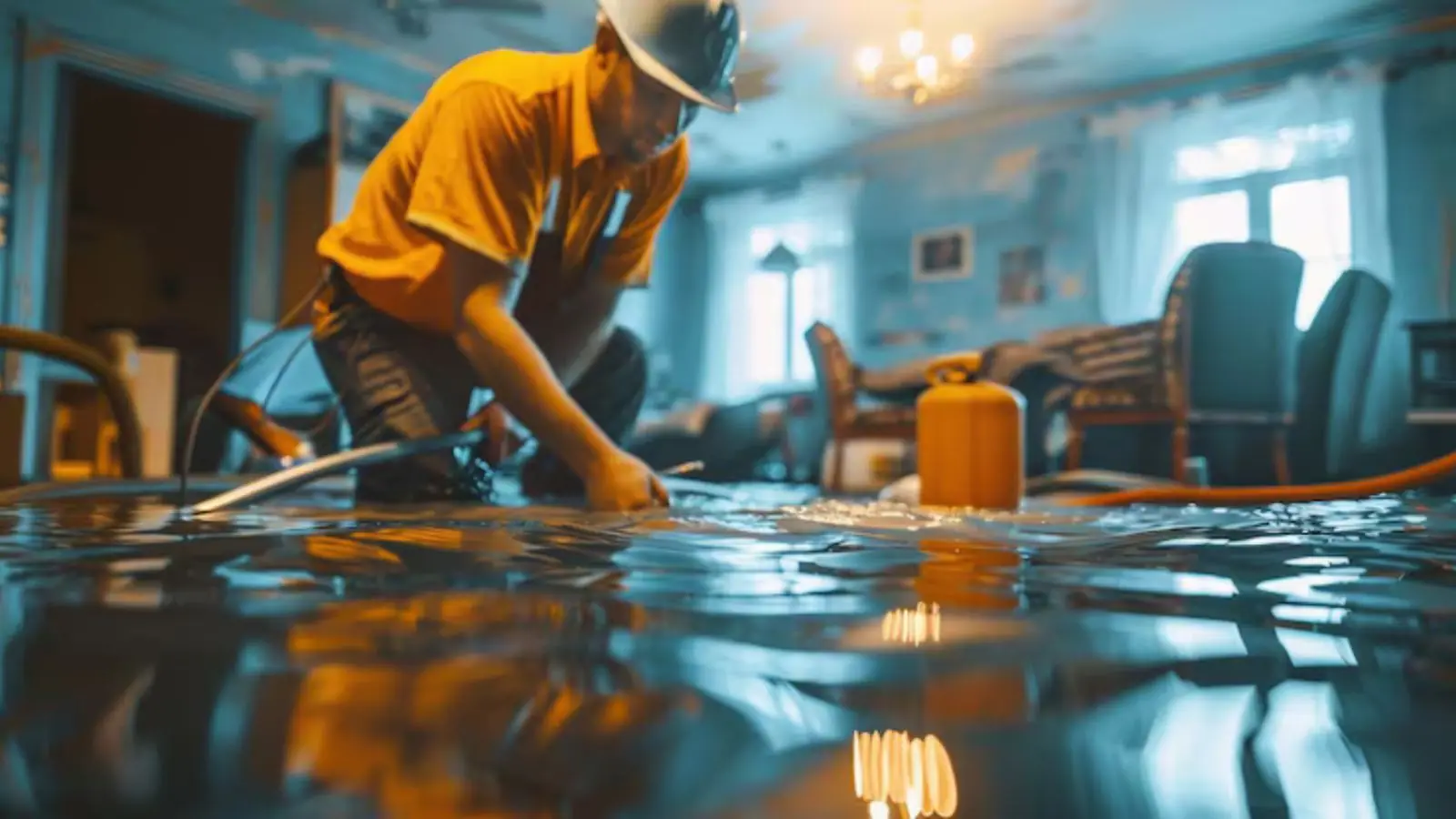
Mitigation stops the damage from growing. Crews shut off or isolate the source, extract standing water with pumps and extraction units, remove materials that cannot be saved, and set up air movers and dehumidifiers. The clock matters here because wet drywall, insulation and carpet pad begin to break down quickly.
You can read more about this phase in our service page on water mitigation, which lays out the first 24 to 72 hours step by step.
Stage two: cleanup
Cleanup deals with what the water left behind. That means removing wet debris, washing and sanitizing surfaces, treating odors and, when the water was contaminated, taking out porous materials that cannot be made safe. Content handling often happens here too, such as moving furniture, boxing small items and separating wet from dry belongings.
Sewer backups and outdoor flooding stretch this stage out and bring stricter safety steps. Our cleanup page explains how technicians sort contaminated from salvageable materials.
Stage three: repair and rebuild
Repair puts the house back together. Drywall, insulation, flooring, trim, paint and cabinets are replaced or refinished, and this is where permits can come into play for larger jobs. For larger rebuilds, the city can tell you which permits apply.
Some companies handle all three stages. Others stop after mitigation and hand you off to a builder. Either path is reasonable as long as you know where each stage starts and ends.
Where the S500 standard fits
ANSI/IICRC S500 is the published industry standard for water damage restoration. It defines water categories from 1 (clean) to 3 (grossly contaminated) and loss classes from 1 to 4, which describe how much water and how absorbent the materials are. You do not need to memorize it, though a fair question for any bidder is whether its crews follow it.
| Stage | Main goal | Typical tasks | Ends when |
|---|---|---|---|
| Mitigation | Stop the spread | Extraction, removal of wet materials, drying equipment | Readings show materials are dry |
| Cleanup | Make surfaces safe | Sanitizing, odor control, debris removal | Surfaces are clean and odor is gone |
| Repair | Rebuild the finish | Drywall, flooring, paint, trim | Rooms match the pre-loss look |
What a written scope should contain
A good scope reads like a plan, not a sales pitch. It should name each room, the materials involved, the water category, the equipment and the expected drying days. It should also say what is not included, so you are not surprised by a repair bill after the drying ends.
- Rooms and materials affected, with moisture readings
- Water category and loss class
- Equipment list (air movers, dehumidifiers, extraction units) and expected days
- Materials to be removed and why
- What repair work, if any, is included and what is separate
- Documentation you will receive for your insurer
Comparing two scopes?
Call and read us the line items. We will explain what each one does and why it matters.
Cost factors and insurance
Cost depends on the water category, the square footage, the materials affected, the days of drying and how much rebuild follows. No honest number exists before someone looks. On coverage, policies tend to respond to abrupt events like a failed hose and push back on slow leaks that were ignored, and floods usually call for a separate flood policy. Your policy and your insurer have the final word. Want your real number? Call (909) 505-3870.
A quick way to read a quote
When you hold a quote, mark each line as mitigation, cleanup or repair. If one quote lists only drying and another includes new flooring and paint, they are not competing offers for the same work. Ask the shorter one whether repair is available later and ask the longer one to separate its line items so you can compare them fairly.
Yucaipa note: who serves your property
Yucaipa Valley Water District runs the water and sewer systems here and across the line in Calimesa. A broken main in the street is the district's problem, while a failed pipe inside the walls is yours, so knowing where responsibility switches saves time in the first hour.
Winter storms are the season when the mountain edge of the valley sees the most runoff. The 2022 flooding and mudflows near Oak Glen are a reminder that flood damage and plumbing damage are handled differently by most policies, so pull up the FEMA flood map for your address and reread your policy before the next storm.
Sources: a LAFCO staff write-up of the district's service area, and broadcast coverage of the 2022 Oak Glen mudflows.
Frequently Asked Questions
No. Mitigation is the first stage and focuses on stopping the damage. Restoration is the whole chain, including cleanup and repair.
A small supply-line leak can finish in under a week, while a large loss with rebuild can run for weeks. Drying days are the part that depends most on readings.
Yes, ask for one. It protects you and makes insurance documentation easier.
Not automatically. If mold is present, remediation follows a separate standard (S520) and may need a separate scope. See our mold remediation page.
Small Category 1 spills, yes. Anything contaminated or hidden inside walls is safer to leave to trained crews.
Still have a question?
Call the 24/7 emergency line and ask. Scope and price are explained before work starts.