
Mitigation in one sentence
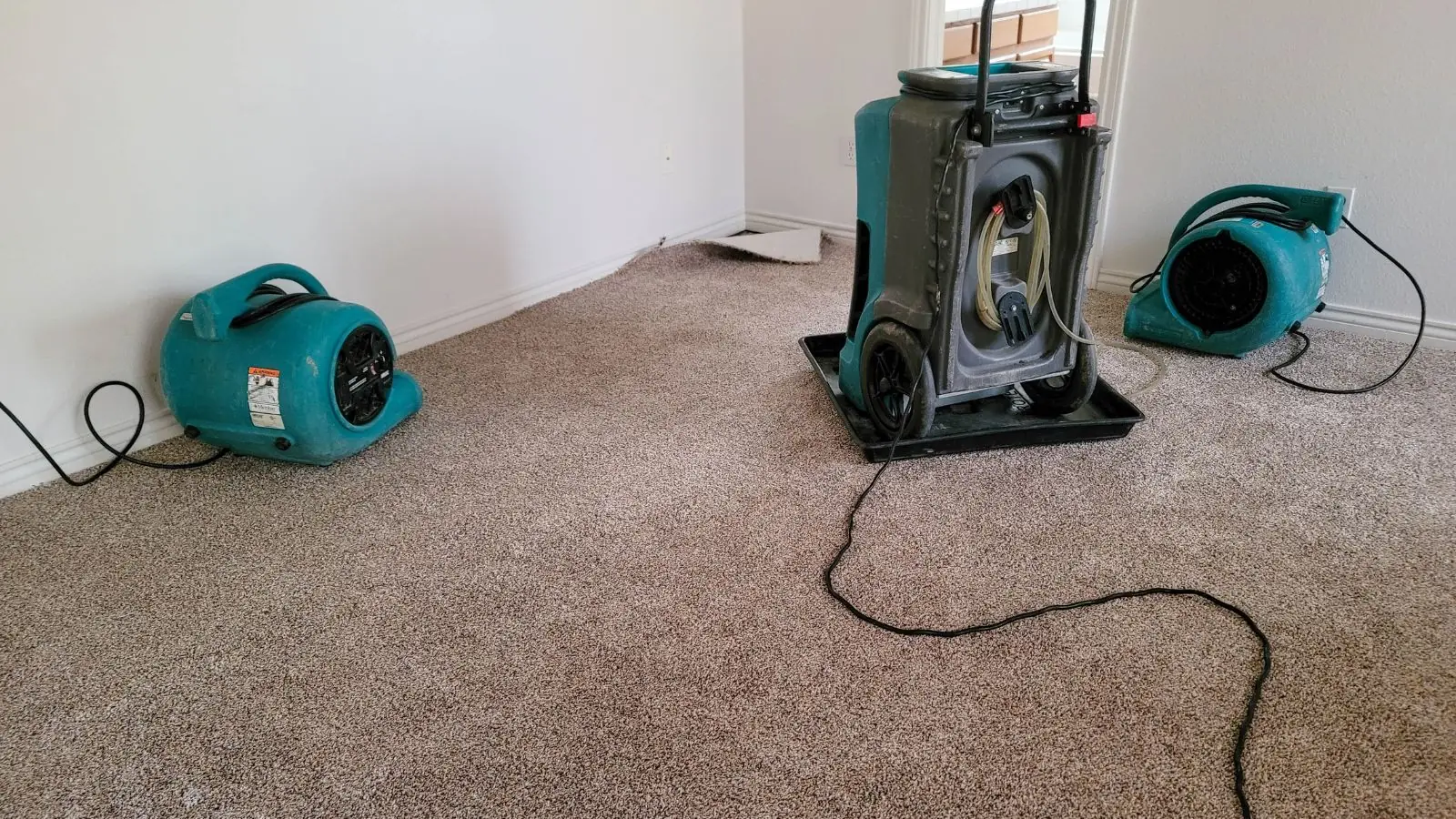
To mitigate means to lessen. In a water loss, mitigation is every action that keeps the damage from getting bigger, from shutting off the supply to setting up drying equipment. It is not the rebuild, and it is not the final cleaning.
Think of it like first aid for a building. Good first aid does not fix everything, but it prevents the avoidable complications.
The first 24 to 72 hours
Time works against wet buildings in layers. Within hours, water wicks up drywall and soaks carpet pad. Within a day or two, fasteners rust, finishes swell and humidity climbs. By day three, many porous materials have lost the chance to be dried in place.
Hour zero
Stop the source and make the area safe. Cut power to wet areas only when reaching the panel is safe.
Hours 1 to 6
Extract standing water with pumps, wet vacuums and truck-mounted or portable extraction units.
Day 1
Map moisture with meters and thermal imaging, remove materials that cannot dry, and place equipment.
Days 2 to 3
Run air movers and dehumidifiers, recheck readings daily and adjust equipment.
When water is spreading right now
If water is moving across floors or through a ceiling, call a 24/7 line and keep working on the source while you wait. Move electronics and small valuables up high, lift curtains and rugs, and keep children and pets away. Our crews take emergency calls at night and on weekends and work out arrival timing once they hear the situation.
Power and gas
Water touching outlets, a panel or appliances means stay back and phone 911 or the power company before anything else. A gas smell means everyone exits and you call from outside.
Mitigation versus restoration versus repair
| Term | Question it answers | Example task |
|---|---|---|
| Mitigation | How do we stop the damage from growing? | Extract water, set dehumidifiers, remove soaked pad |
| Restoration | How do we return it to its pre-loss state? | Cleaning, deodorizing, drying to standard, rebuild plan |
| Repair | How do we rebuild the finishes? | New drywall, flooring and paint |
Our page on water mitigation describes how crews handle this stage on real jobs, and the water damage repair page picks up where drying ends.
What the equipment actually does
Air movers push dry air across wet surfaces, and LGR or desiccant dehumidifiers pull the moisture out of that air. Without the dehumidifiers, fans simply move humid air around. Moisture meters and thermal imaging cameras tell the crew when materials have reached the same readings as an unaffected spot.
That is also why a rental fan from a hardware store rarely finishes the job. Without readings, it is hard to know whether the drywall behind the baseboard is dry.
Water spreading or still damp?
Call and describe it. You get the drying plan, the scope and the price up front.
Questions to ask before a crew starts
A clear conversation up front prevents most disputes later. Ask what the crew will remove and why, how many days of drying they expect and what readings will show the job is done. Ask whether the scope covers rebuild or stops at dry.
Also ask what you need to do. Some jobs need you to keep a room closed, avoid adjusting the thermostat or move belongings before equipment goes in. A good crew gives plain instructions and writes them down.
Finally, ask about documentation. Moisture logs, photos and equipment records help your insurer follow what happened, and they cost nothing to keep if the crew collects them as the job goes.
Cost factors and insurance
- Water category and how clean it started
- Square footage and number of rooms
- Materials that must be removed
- Days of drying and amount of equipment
- Whether rebuild follows
On coverage, an abrupt event like a split hose is the kind policies often address, a long-running seep often is not, and flood damage generally needs its own policy. Check your policy or ask your insurer. Want your real number? Call (909) 505-3870.
A realistic example
Picture a washing machine hose that splits on a Saturday evening. Water reaches the hallway carpet and the drywall behind the laundry closet. Mitigation means shutting off the valve, extracting the water, pulling the wet pad, cutting the bottom of the wall open to dry the cavity and running a dehumidifier for a few days.
Waiting until Monday turns the same event into swollen baseboards, stained drywall and a possible musty smell, which is a larger and costlier repair.
Yucaipa note: finding your shutoff
In Yucaipa one agency, Yucaipa Valley Water District, supplies both water and sewer service, and it can point you toward the meter and the main valve on your property. That is the single most useful thing to know before a leak happens.
Walk the house today and find the main valve and each appliance shutoff, then label them with tape. A leak that starts at midnight is easier to stop when nobody has to search for the valve.
Source: LAFCO's service-area description for Yucaipa Valley Water District.
Frequently Asked Questions
Removal is part of it. Mitigation also includes drying, moisture mapping and protecting undamaged materials.
Most policies expect you to prevent further damage, and mitigation does that. Keep photos and receipts, and check your policy or ask your insurer.
Often three to five days, though bigger losses and dense materials take longer. Daily readings decide.
No. If mold is found, remediation is a separate scope. See mold remediation.
Yes. The line is staffed around the clock, and crews head out the same day when they are available.
Still have a question?
Call the 24/7 emergency line and ask. Scope and price are explained before work starts.